Why do we have Sheriffs?
The Sheriff - formerly known as the "Shire Reeve" - was a royal official in Anglo-Saxon England responsible for maintaining law and order within a specific area called a shire, similar to a modern day County.
Responsibilities
Law Enforcement: The Shire Reeve enforced the king's laws and maintained public peace.
Judicial Duties: They presided over local courts, resolving disputes and administering justice.
Tax Collection: The Shire Reeve was responsible for collecting taxes and ensuring that royal revenues were properly managed.
Organizing Local Defense: They could summon a posse, a group of able-bodied men, to assist in capturing criminals or maintaining order.
Historical Context
The role of the Shire Reeve evolved over time, especially after the Norman Conquest, where it became more formalized. Initially, the position was often filled by local nobility or landowners, but it later included individuals from the peasant class. The Shire Reeve's authority was significant, as they acted as the king's representative at the local level, overseeing various administrative and judicial functions.
Only 15 Cities and Towns cross England and Wales have retained the Civic role of Sheriff. These are Berwick-upon-Tweed, Canterbury, Carmarthen, Chester, Gloucester, Haverfordwest, Lichfield, Lincoln, Newcastle, Norwich, Nottingham, Oxford, Poole, Southampton, York.
In 1985 Cllr Andrew Gravells (then Sheriff of Gloucester) contacted the Sheriffs of these Cities and Towns with an invitation to meet. Subsequently a National Association was formed which continues today. The link to the website of the National Association of City & Town Sheriffs of England & Wales (NACTSEW) is here.


Sheriff and Deputy Mayor of Gloucester 2025-26
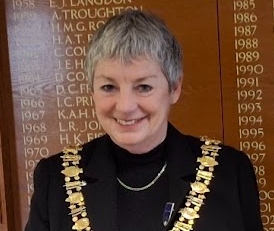
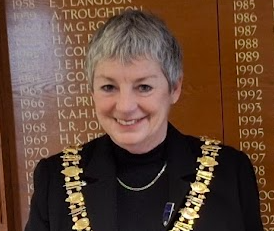
Councillor Linda Castle
Linda Castle was born in Longlevens and attended the local schools. She was elected as City Councillor in 2021. Her first job was in finance at C.E.G.B. later to become Nuclear Electric and worked there for 20 years. She then worked for 20 years in the NHS, with job roles ranging from NHS Complaints, the Blood services to Clinical systems trainers.
With her husband Ian, they have raised two sons in Longlevens. Since retiring from the NHS, Linda’s hobbies are drawing and painting classes, dog training, which she feels will be an ongoing challenge and dog agility which keeps her fit. She also attends the odd European Gloucester rugby game once a year, with her husband.
Linda’s personal message is that anything is possible, but you have to enjoy what you are doing. Believe in yourself, everyone has a strength of some kind.
City of Gloucester Shrievalty Association
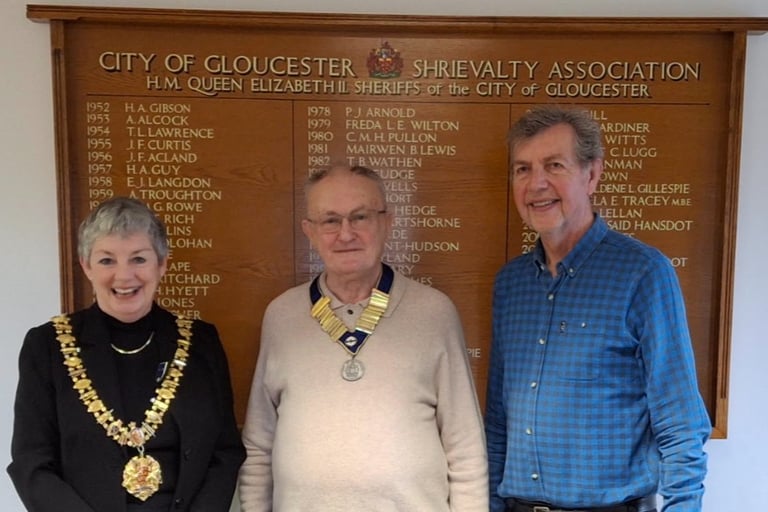
Membership of the Gloucester Association is open to those who have served as Sheriff and also Consorts. There are formal officer positions (Chair, Secretary and Treasurer) and a Constitution.
The main aims of the Association are:
Promote and protect the historic office of Sheriff of Gloucester;
Promote friendship and social interaction between present and former Sheriffs of Gloucester and their Consorts;
Promote the best interests of the City of Gloucester.
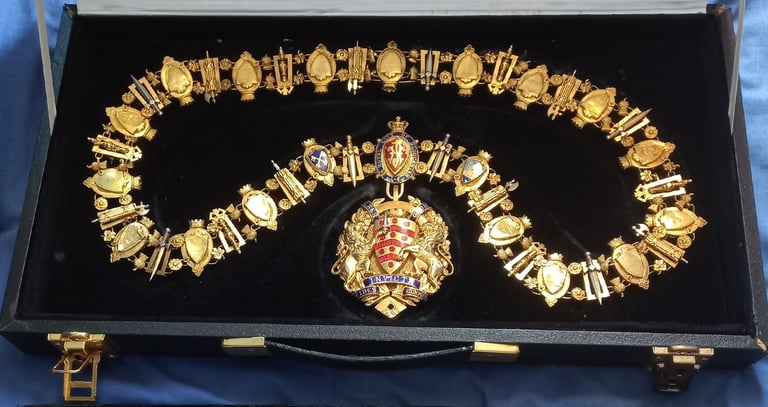
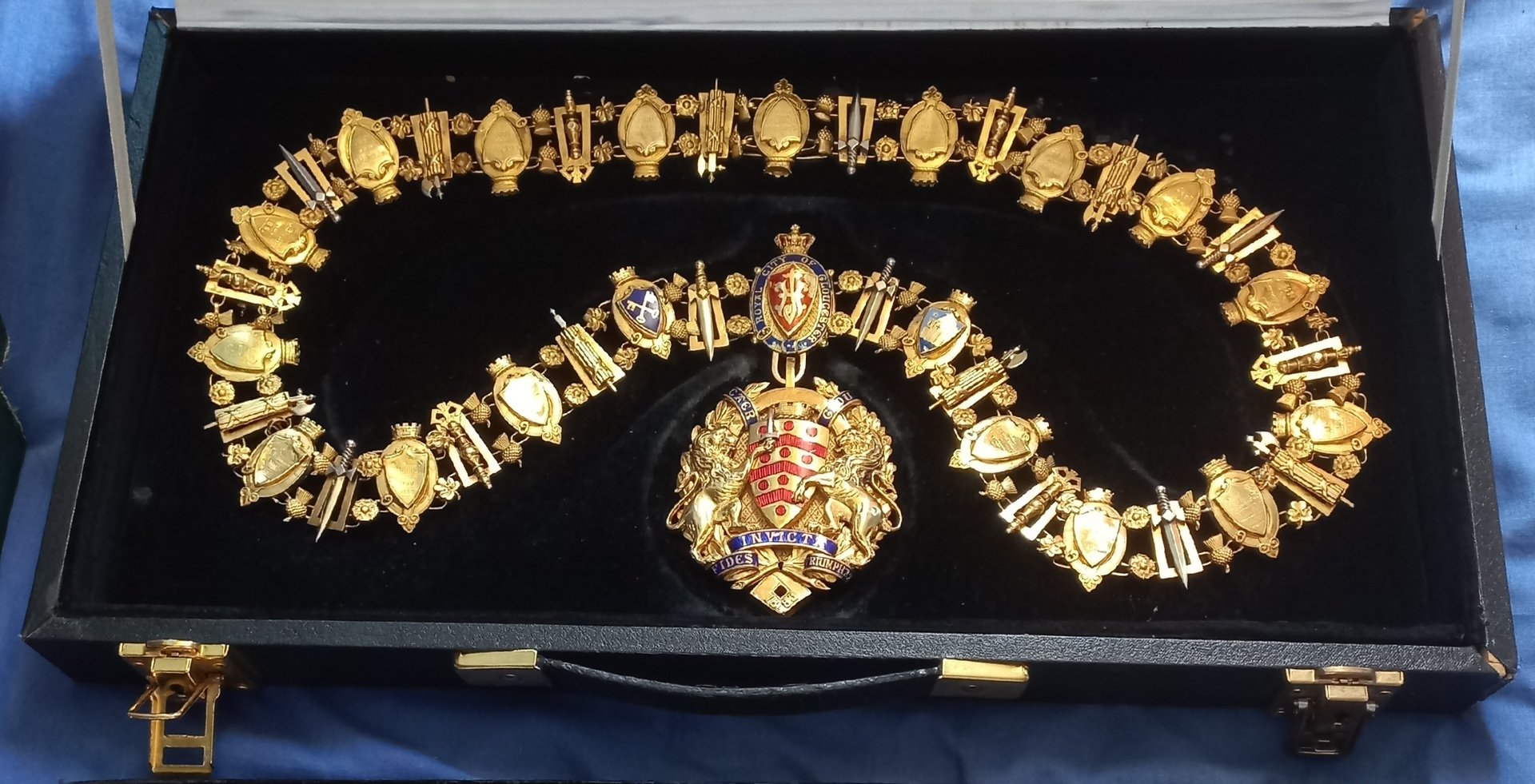
At the AGM (September) the President's Collar is passed to the next member, by date they were Sheriff.
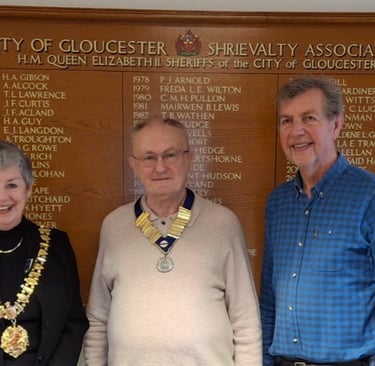
L-R: Cllr Linda Castle (Sheriff), Cllr Howard Hyman (Honorary President), David Brown (Chair)
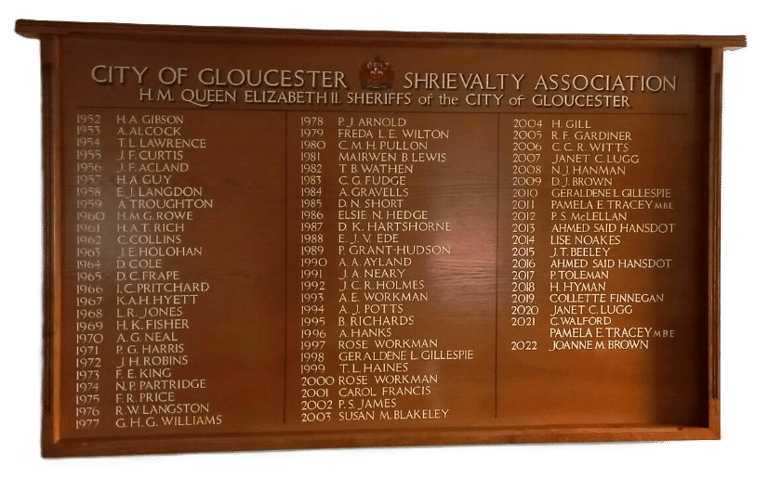
Our Shrievalty Association hold a complete listing of every individual who has had the honour of serving Gloucester as Sheriff.
Since the Municipal Corporations Act 1835 the names have been recorded within the pages of the bible currently held in the Mayor's Parlour.
The board opposite was commissioned and funded by the City of Gloucester Sheriff's Association in 2009. It is currently displayed in the "Sheriff's Room" at the Gloucester City Council Offices in North Warehouse.
Following the death of Her Majesty Queen Elizabeth II a new board of the same design was commissioned.
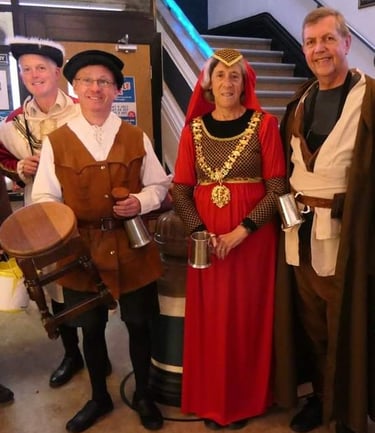
The Sheriff’s Assize of Ale dates back to medieval times when the Sheriff was responsible for ensuring the ale on sale in the city was of palatable quality.
Today this practice is recreated annually with the primary aim of raising funds for the Civic Charities.
L-R: Paul James, Sheriff 2003 (who re-introduced the Assize.), Jim - the all important "Ale-Conner", Joanne Brown, Sheriff 2022, David Brown, Sheriff 2009
Sheriff's Assize of Ale
The 'Lamprey Pie' Tradition
Gloucester has presented a Lamprey Pie to the reigning monarch at various times since the medieval era.
By 1200 it had become customary for the City of Gloucester to send the English monarch a pie each year. It was expected. However, it is recorded that King John fined the city 40 marks or £26 13s 4d (equivalent to £38,000 in 2020) for failing to send a pie one Christmas.
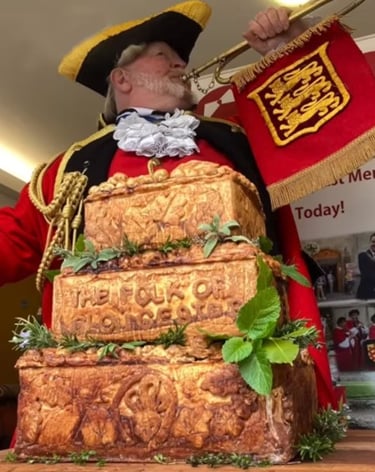
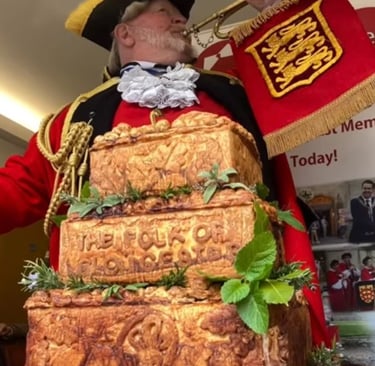
Alan Myatt (Gloucester Town Crier since 1989) announcing presentation of the Lamprey Pie in 2023.
Memorabilia and moments from Gloucester's civic history.